What Is a Plasmoid?
Self-contained plasma structures
In Plain English
Normal plasma is chaotic. When you ionize a gas, the resulting soup of charged particles tends to expand and dissipate, like smoke drifting apart in still air. Without something to hold it together, plasma doesn't last. It spreads out, cools down, and recombines back into ordinary gas.
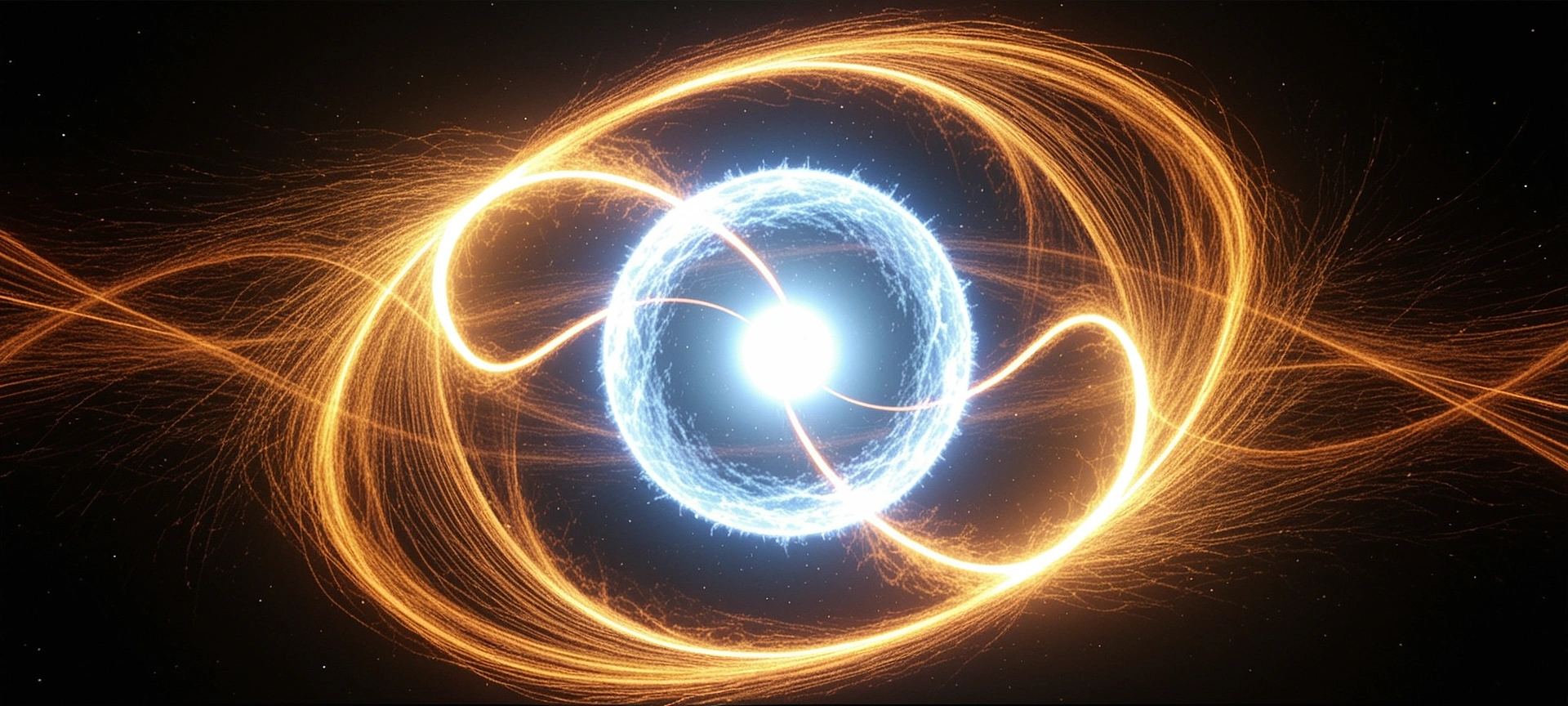
But under the right conditions, something remarkable can happen. Plasma can organize itself into a stable, self-contained structure, a compact ball or donut of ionized gas held together not by a container, but by its own magnetic fields. This structure is called a plasmoid.
Think of a smoke ring versus loose smoke. The loose smoke drifts apart immediately. But a smoke ring holds its shape: it has internal structure, a coherent form that persists as it travels through the air. A plasmoid is the plasma equivalent of that smoke ring, except instead of air currents maintaining the shape, it's magnetic fields generated by the plasma itself.
Plasmoids occur naturally. Solar flares eject massive plasmoids from the sun's surface, blobs of magnetized plasma that travel through space at millions of kilometers per hour while maintaining their coherent structure. Ball lightning, the mysterious glowing spheres occasionally reported during thunderstorms, may be natural plasmoids. And in laboratories, physicists routinely create plasmoids in fusion experiments, where they've been studied since the 1950s.
From Plasma to Plasmoid
Regular plasma dissipates like smoke. A plasmoid is a self-contained plasma structure held together by its own closed magnetic field lines, like a magnetic bottle that the plasma builds around itself.
How It Works
Magnetic Bottles
The key to understanding plasmoids is a self-reinforcing feedback loop between plasma and magnetic fields. Moving charged particles, and plasma is nothing but moving charged particles, generate electric currents. Those currents produce magnetic fields. And those magnetic fields, in turn, push back on the plasma, confining it.
In a plasmoid, this loop closes on itself. The plasma's own motion generates the very magnetic field that holds the plasma together. No external magnets required. The plasma is simultaneously the contents and the container, a self-sustaining magnetic bottle. This is why plasmoids can exist in open space, far from any reactor or containment device. They carry their own confinement with them.
The Toroidal Shape
Plasmoids tend to form donut shapes: toroids. This isn't coincidence; it's physics. A toroid is the natural geometry for closed magnetic field lines. The field lines wrap around the donut in two ways: "poloidal" lines loop through the hole and around the outside (like thread wound around a ring), while "toroidal" lines circle the long way around the donut. Together, they create a stable magnetic cage with no open ends for plasma to escape through.
If you've read the Magnetic Confinement 101 guide, this should sound familiar. The Field-Reversed Configuration (FRC) is essentially an engineered plasmoid, a toroidal plasma structure that confines itself through its own reversed magnetic fields. The difference between a natural plasmoid and an FRC reactor is that the FRC is deliberately created and sustained, while natural plasmoids form spontaneously when conditions are right.
Ball Lightning: Nature's Plasmoid?
Ball lightning is one of the most enduring mysteries in atmospheric science. Witnesses, thousands of them over centuries, describe luminous spheres, typically 10–30 cm in diameter, that appear during or after thunderstorms. They float through the air, sometimes passing through windows or walls, lasting anywhere from a few seconds to over a minute before disappearing silently or with a small explosion.
Despite extensive documentation, ball lightning has been extraordinarily difficult to study scientifically because it's rare, unpredictable, and short-lived. Several theories attempt to explain it, but one of the most physically compelling is the plasmoid hypothesis: ball lightning is a naturally occurring plasmoid, a compact toroid of plasma confined by its own magnetic fields. In 2012, Chinese researchers accidentally captured the optical spectrum of ball lightning during a thunderstorm, finding it contained silicon, iron, and calcium: elements consistent with vaporized soil, suggesting the plasma formed from ground material struck by lightning.
If ball lightning really is a natural plasmoid, it proves something important: self-contained plasma structures can exist in the open atmosphere without any engineered containment. Nature figured out the physics. The question is whether humans can replicate and scale it.
Why This Matters for 4Orbs
The three objects in the MH370 footage behave like plasmoids. In both the satellite thermal imagery and the FLIR footage, the orbs maintain coherent, compact structure as they move. They don't dissipate, trail off, or break apart. They orbit the aircraft in coordinated formation, maintaining consistent spacing and velocity: behavior that requires internal structure, not just a cloud of hot gas.
Their thermal signatures are also consistent with confined plasma. The objects appear bright in infrared, indicating high temperature, yet they maintain sharp boundaries rather than the diffuse glow you'd expect from an unconfined heat source. This is precisely what you'd see from a plasmoid: plasma confined by magnetic pressure, with a well-defined boundary where the magnetic field transitions to ambient conditions.
Forbes argues that the orbs are engineered plasmoids, artificial plasma structures created and sustained by FRC technology. If correct, each orb would be a compact toroid of magnetically confined plasma, generated and controlled by some form of advanced electromagnetic system. The underlying physics is real and demonstrated in laboratories. The speculative leap is in scale, stability, and independent propulsion.
Two electrodes and a capacitor bank that squeeze a plasmoid out of a pinch
From hydrogen to helium to energy
Full plasma physics page with theories and references
See the MH370 orb analysis
Mainstream vs. Speculative
This site covers both established science and unproven claims. Here's where the line falls for this topic.
Plasmoids are real, well-documented plasma structures. They are routinely created in laboratories and observed in solar physics: the sun ejects plasmoids during coronal mass ejections. Ball lightning is a widely observed but poorly understood atmospheric phenomenon with thousands of documented reports.
That stable macroscopic plasmoids can be engineered to move independently through the atmosphere with controlled trajectories. That the MH370 orbs are such structures, artificial plasmoids created by FRC technology, capable of sustained flight and coordinated formation maneuvers. This is not demonstrated in published research.
Key Terms
Plasmoid
A coherent, self-contained plasma structure held together by its own magnetic fields. Plasmoids maintain their shape without external confinement and can travel through space or atmosphere as a discrete entity. First described by Winston Bostick in the 1950s.
Toroid
A donut-shaped (torus) geometric form. Plasmoids naturally tend toward toroidal shapes because a torus allows magnetic field lines to close on themselves without endpoints, creating stable containment. The inner "hole" of the donut is where the field reverses.
Magnetic Reconnection
The process where oppositely directed magnetic field lines break and rejoin in a new configuration, releasing enormous energy. Magnetic reconnection is a primary mechanism for plasmoid formation: it's how solar plasmoids are born during flares.
Ball Lightning
A rare atmospheric phenomenon: luminous, roughly spherical objects that appear during thunderstorms, lasting seconds to minutes. Widely reported but poorly understood. One leading hypothesis identifies ball lightning as a naturally occurring plasmoid.
Self-Organization
The spontaneous emergence of ordered structures from disordered systems. In plasma physics, self-organization is how diffuse plasma can spontaneously form coherent structures like plasmoids, filaments, and vortices without external guidance.
Compact Toroid
A general term for toroidal plasma configurations that don't require external toroidal magnets: the plasma generates its own confining field. Field-Reversed Configurations (FRC) and spheromaks are both types of compact toroids. Every plasmoid is a compact toroid.