magnetic confinement
10 theories and 5 videos tagged with this topic.
Theories (10)
Centrifugal Plasma Stabilization
Proposes that spinning plasma creates centrifugal forces that stabilize against turbulent instabilities improving confinement
Classified Military Fusion Reactors Preceded Commercial Development
The military had operational fusion reactors using field-reversed configurations by the 2000s, predating commercial ventures like Helion Energy, enabled by the development of high-Tesla superconducting magnets and...
Dense Plasma Boron Fusion
Boron-11 fusion becomes possible at lower temperatures using dense plasma focus with quantum mechanical effects at high density
Exotic Vacuum Object Plasma Orbs
Suggests that self-contained plasma structures using electromagnetic fields for confinement could exist as permanent stable fusion reactors
Historical Classification of Fusion
Fusion technology capable of micro explosions and propulsion has been classified since at least 1981, explaining the gap between textbook knowledge and public capability
MH370 Orbs as Fusion Reactors
Proposes that orbs seen in MH370 videos are controlled fusion reactors using spinning for stabilization with distinctive heat signatures
Non-Fission Pure Fusion
Aneutronic fusion can be triggered without fission primary using magnetized plasma convergence, enabling clean fusion devices
Orb Fusion Ignition Mechanism
The MH370 orbs are a fusion ignition device that compresses plasma to trigger fusion, using the orbs themselves as converging implosion drivers
Resonance Cold Fusion Model
Proposes that fusion can occur at lower temperatures through molecular vibration creating relativistic effects that overcome Coulomb barrier without extreme thermal energy
UAP Orbs Use Magnetic Mirror Fusion Technology
The cylindrical ring structures observed in UAP footage are not simple plasma balls but sophisticated fusion reactors using magnetic mirror configurations, specifically tandem mirror or field-reversed configurations, to...
Videos (5)
The Orbs Were the Trigger
The video analyzes a 1981 textbook on thermonuclear micro explosions to explain the physics behind MH370's plasma orbs.

The Fusion Geometry Behind UFO Propulsion
This video explores magnetic mirror configurations and their application to fusion technology, particularly focusing on how these concepts relate to UAPs (Unidentified Aerial Phenomena) or 'orbs' seen in MH370 footage.
What Really Limits Hot Fusion Reactors
This video presents a detailed exploration of hot fusion reactor limitations focusing on the fundamental physics challenges of magnetic confinement fusion.

The Missing Link in Fusion Research
David Kirkley explains fusion physics revealing that fusion energy safe releasing small amount neutrons compared fission no cascading effect can turn off anytime no meltdown runaway concerns just hit switch turn off.
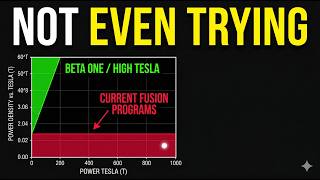
The Fusion Graph Nobody Wants You to See
The video discusses the concept of beta in fusion energy, emphasizing its importance in fusion power output. It critically examines the current state of fusion technology, suggesting that existing approaches are unable...
Tag Stats
- Theories
- 10
- Videos
- 5
- Total items
- 15