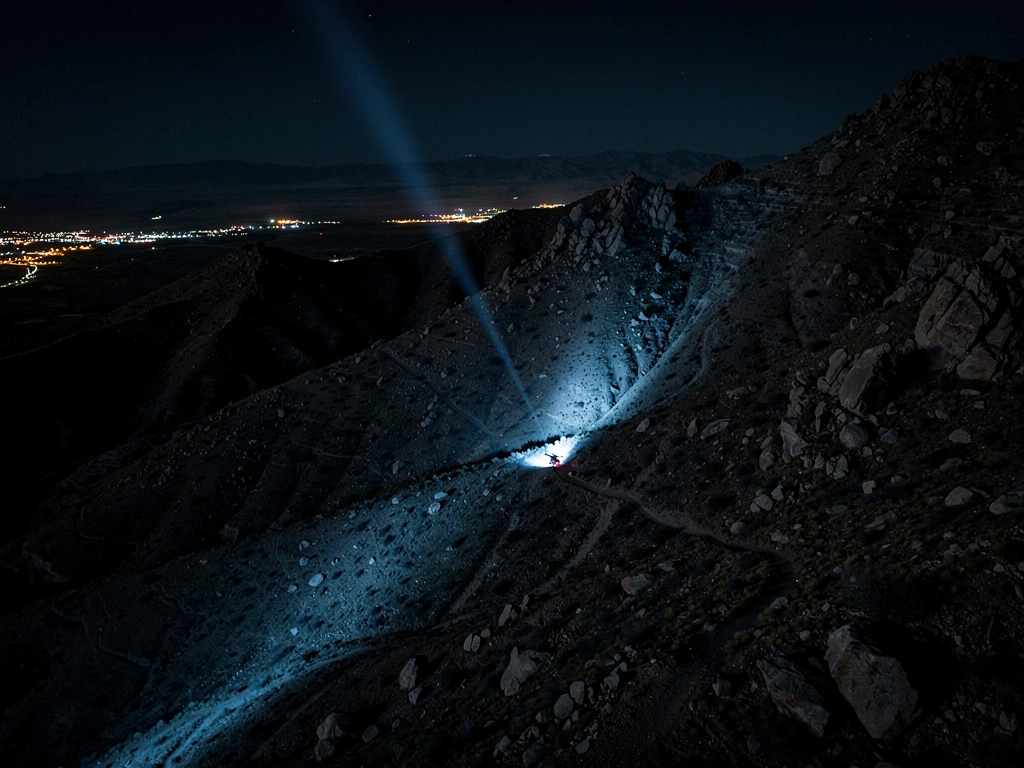
The Disappearance of General Neil McCasland
A retired two-star general who ran the entire Air Force Research Laboratory walked out of his Albuquerque home on a Friday morning in February 2026 and has not been seen since. He left his phone and glasses on the table and took a revolver. There is no evidence of foul play and no body. His case became the anchor of a national "missing scientists" panic. Strip the panic away and McCasland is the one piece of it that still demands an answer.
A general walks off, and a panic forms around him
William Neil McCasland is a real person with a verifiable career. He graduated from the Air Force Academy in astronautical engineering in 1979, earned a doctorate at MIT, and spent his service in the parts of the Air Force that build things: space acquisition, the Space Based Laser Project Office, the Phillips Research Site at Kirtland. From May 2011 to October 2013 he commanded the Air Force Research Laboratory, the service's science and technology command. He sat above the labs. That is not a small fact, and it is not the same as running a single black program.
On February 27, 2026, he was gone. The Bernalillo County Sheriff's Office says he left his phone, his glasses, and his wearable devices at home, and that his wallet, hiking boots, and a .38 revolver were missing. A Silver Alert went out. The FBI joined as an assisting agency. Months later, the search has produced no sighting, no direction of travel, and no body. What it produced instead was a story: McCasland became the headline name in a 2026 "missing scientists" theory and a federal review of deaths and disappearances tied to sensitive American research.
4Orbs ran the whole of that wider theory against the record, and most of it does not hold as a coordinated-targeting story. The aggregate death count among the named figures is not statistically unusual once you measure it properly. The two homicides on the list have identified, personal-motive perpetrators. Several of the disappearances are still genuinely open, one has already resolved to an apparent self-harm, and the people involved range from a research scientist to a property custodian to an administrative assistant. That is not nothing: people are still missing. But it is not the campaign the panic describes. The companion analysis lays out that work in full. This page is about the one case that survives it.
Mixed. His career and the facts of the disappearance are documented and attributed. The explanation is not. No reading, including abduction, medical misadventure, or self-harm, is established by the public record, and the page refuses to assert one. What it does insist on: the disappearance is real, the case is open, and the usual quick dismissals do not close it.
As of June 26, 2026: McCasland remains missing. No remains, no arrest, no named person of interest. This is an active investigation that can change quickly; the date stamp here is the freshness of the record, not a closing.
Timeline
Official findings, public reporting, and unverified speculation are color-coded separately. Where a claim is thin or single-sourced, the note says so.
McCasland's Air Force career: USAFA astronautical engineering (1979), MIT doctorate (1988), space acquisition roles, the Space Based Laser Project Office, and command of the Phillips Research Site at Kirtland AFB
af.mil biography, corroborated by Wikipedia and Kirtland AFB.
Holds senior command at AFRL's Space Vehicles Directorate and the Phillips Research Site at Kirtland, the part of the Air Force that funded advanced-materials research in materials engineer Monica Reza's field
This window is the actual basis for the later "McCasland–Reza connection" claim. It is funding-and-command overlap, not documented joint work.
Commands the Air Force Research Laboratory at Wright-Patterson AFB, then retires
AFRL is the Air Force science and technology command. He led the command, not one black program.
Director of Technology at Applied Technology Associates, Albuquerque, a BlueHalo subsidiary working in space and directed energy
Recent, sensitive-adjacent work. His wife says his clearances afterward were "very commonly held."
Monica Reza, a JPL and former Aerojet materials engineer later named in the same federal review, goes missing while hiking in California
Included for cluster context. Still missing.
McCasland is no longer listed on Riverside Research's board of trustees, the seat he took in 2019, indicating he had stepped down. A tabloid account says he flew to Washington shortly before vanishing to resign in person, telling his wife he "could not keep up, mentally"
The board departure is confirmed by Riverside Research's own current board page. The DC-trip detail and the quote are single-sourced to the Daily Mail, from the released records, and not independently corroborated.
McCasland attends a dinner at Cervantes restaurant near Kirtland Air Force Base, wearing a Kirtland Partnership name tag. A colleague there later tells deputies he seemed unusually withdrawn and "spacey," out of character for a man she called crazy smart
From a recorded BCSO interview reported by Los Angeles Magazine (May 28) and NewsNation. The same colleague said "the man's name is in the UFO documents."
The morning he vanishes, his wife tells deputies he had been having "brain fog," anxiety, and declining memory, seemed "down" and "clingy," and said "I don't want to go on like this." A friend later cites a year of personal losses and a fear of abandonment
From police interview records reported by Los Angeles Magazine (Jun 12) and NewsNation (Jun 16). The day-of account leans toward a medical or self-harm reading and complicates the wife's later public "not confused and disoriented" statement. Earlier reporting (NewsNation, Jun 3) added a newly prescribed sleep medication that left him foggy.
Last seen around 11 a.m. near Quail Run Court NE, Albuquerque. He leaves his phone, glasses, and wearables; his wallet, hiking boots, a red backpack, and a .38 revolver with holster are gone. A Silver Alert is issued
BCSO press release, March 12, 2026.
The X account @TMBSPACESHIPS, which had posted about plasma and ion propulsion under a self-described retired Air Force officer with an engineering doctorate, stops posting
Online sleuths link the account to McCasland on circumstantial grounds. No investigator, family member, or agency has confirmed it was his. Speculation, not fact.
A gray Air Force sweatshirt is found about 1.25 miles east of his home. Initial testing shows no blood
Single-sourced (CNN). His family has not confirmed the sweatshirt was his.
FBI confirmed assisting. BCSO states there is "no evidence indicating foul play" but the case is active. His wife disputes dementia and the espionage theory
BCSO press release; Albuquerque Journal.
The White House announces a government-wide review of the cases. Reps. Comer and Burlison send House Oversight letters naming at least 11 scientists, McCasland among them, and repeating a New York Post claim of a "close professional connection" between him and Reza
The letters say "Reports have even alleged" and footnote the NY Post. This is media-sourced, not a committee finding.
In a Judicial Watch interview, UFO whistleblower David Grusch names McCasland among figures he ties to classified non-human-craft programs and calls his disappearance "concerning." NewsNation reports the same the next day
Origin: Judicial Watch "On Watch" (May 5). NewsNation (May 6) corroborates Grusch flagging the case as concerning, but not his fuller characterization of the programs, which is his own account. The wife has separately rejected any "special knowledge" of crash debris.
Melissa Casias, another name on the list, is found dead in a New Mexico national forest with a handgun recovered nearby. Her manner of death is undetermined and police have not ruled out foul play
Context. Consistent with, but not confirmed as, a voluntary or self-inflicted death; cause was pending the medical examiner.
Police interview records obtained through a public-records request are reported by Los Angeles Magazine and NewsNation, adding the family's day-of descriptions of "brain fog" and despair. A tabloid follow-up adds a contested account of resignation attempts
The cognitive-decline material is carried by named-author reporting (Los Angeles Magazine, Lauren Conlin). The resignation-narrative specifics are single-sourced to the Daily Mail, from a records request by an advocate-researcher.
McCasland remains missing. No remains, no arrest, no named person of interest
Status re-verified June 26, 2026 against current reporting; no resolution since the spring.
- U.S. Air Force official biography: Maj. Gen. William N. McCasland : Primary; career, AFRL command, education. Current as of April 2013
- BCSO press release (Mar 12, 2026) : Primary; disappearance facts and foul-play language
- Albuquerque Journal: "Retired general was not confused and disoriented, wife says" (Mar 12, 2026)
- CNN: FBI search for missing retired general (Mar 17, 2026)
- NewsNation: McCasland "foggy" before disappearance (Jun 3, 2026)
- Los Angeles Magazine: "The Last Sighting of Retired General Neil McCasland" (Lauren Conlin, Jun 12, 2026) : Named-author account of the BCSO records; "brain fog," anxiety, declining memory, the despair remark
- Los Angeles Magazine: "Missing Generals, Vanished Scientists and a Dead UFO Researcher" (Lauren Conlin, May 28, 2026) : The Feb 26 Cervantes dinner, Kirtland Partnership name tag, body-cam account
- NewsNation: last photo and personality changes from police files (Jun 16, 2026)
- Riverside Research: board of trustees and McCasland appointment (riversideresearch.org) : Primary; he joined the board in 2019 and is no longer listed, corroborating his departure
Confirmed Facts
These are established by official statements, public records, or the family's own words. Each is rated for confidence. Everything past this point is interpretation, and labeled as such.
Commanded the Air Force Research Laboratory, 2011–2013
DefinitiveMaj. Gen. William Neil McCasland was the 7th Commander of AFRL at Wright-Patterson AFB from May 2011 until his retirement in October 2013. AFRL is the Air Force's science and technology command, one of the largest research organizations in the Department of Defense. He led the command itself, not a single classified program. USAF Academy, astronautical engineering (1979); MS and PhD from MIT (PhD 1988). Earlier assignments included the Space Based Laser Project Office and command of the Phillips Research Site at Kirtland AFB in New Mexico.
Disappeared from his Albuquerque home on February 27, 2026
DefinitiveMcCasland was last seen the morning of Friday, February 27, 2026, near Quail Run Court NE in Albuquerque. He left his phone, prescription glasses, and wearable devices at home. Missing from the house were his wallet, hiking boots, a red backpack, and a .38 caliber revolver with a leather holster. Bernalillo County issued a Silver Alert based on a risk assessment.
No evidence of foul play, and the case remains open
DefinitiveBCSO's exact wording: "While there is currently no evidence indicating foul play, investigators are examining all available information as the case remains active." In April the office added it had "not developed evidence establishing that Mr. McCasland's disappearance is connected to his classified work," and "no verified information establishing any connection" to other missing-person cases. Separate reporting frames the office as unable to rule foul play in or out. This is "no evidence of foul play, not excluded," not an affirmative clearance. The FBI is assisting; BCSO remains the lead agency.
Still missing as of June 26, 2026
StrongAs of the most recent reporting located, no remains have been recovered, no arrests made, and no person of interest named. A mid-March search using drones, helicopters with infrared, K-9 teams, and a canvass of more than 700 homes produced no confirmed sighting or video of him leaving, and no direction of travel. Officials acknowledged that survival in the surrounding mountains past the early window would be "very low." This page reports an open case; status is re-verified before publication.
After retiring he worked in space and directed-energy defense
StrongFollowing his 2013 retirement, McCasland was Director of Technology at Applied Technology Associates in Albuquerque, a subsidiary of the defense contractor BlueHalo (space and directed-energy work). This bears on the "dated secrets" question. He was not a figure long removed from sensitive technology, even though his wife states he held only commonly held clearances after leaving the Air Force.
His wife publicly rejects the espionage and UFO theories
DefinitiveOn the espionage theory his wife noted he retired about 13 years ago and has had "only very commonly held clearances since," so "it seems quite unlikely that he was taken to extract very dated secrets from him." She also addressed UFO speculation directly: "Neil does not have any special knowledge about the ET bodies and debris from the Roswell crash." Her public rebuttal also said he "was not confused and disoriented" and was "at some risk, but not from dementia," a line that sits awkwardly next to what she told deputies on the day he vanished (see the police-file disclosures).
Police files record the family describing cognitive decline and despair before he vanished
StrongReleased police reports show that on February 27, the day he disappeared, Wilkerson told the Bernalillo County Sheriff's Office her previously fit, sharp husband had been "experiencing what we've been calling 'brain fog,'" along with anxiety, depression, and declining short-term memory. He seemed "down" and "clingy," and at one point said, "I don't want to go on like this." She told deputies he may not have wanted to be found. A friend separately told investigators that "significant personal losses" over the past year, his father's death and his mother's move into memory care, "may have contributed to a growing fear of abandonment," reflected in a recent nightmare of friends turning their backs on him. This is the day-of, private account, and it pulls against her later public statement that he was "not confused and disoriented."
He stayed in active defense-research roles up to his disappearance, and had left at least one
StrongMcCasland joined Riverside Research's board of trustees effective June 27, 2019, per the contractor's own announcement; the company does scientific and engineering work for the Pentagon, the intelligence community, and the Air Force. Riverside's current board page no longer lists him, which corroborates that he left the role. Los Angeles Magazine, drawing on the police records, describes a man who "remained mentally engaged after retirement through consulting work and scientific panels," and a colleague placed him at the Kirtland Partnership the night before he vanished. A single tabloid account (Daily Mail), from the same records, additionally claimed he was trying to resign from several roles, including a Sandia consultancy and an unnamed university research center, over fears of mental decline; those specific roles are not independently corroborated, and his documented post-2013 work points to Applied Technology Associates and BlueHalo, not Sandia. What holds: he was a current, connected figure, not a stale retiree.
- Bernalillo County Sheriff's Office press release (Mar 12, 2026) : Primary, retrieved from bernco.gov
- House Oversight letters, Comer & Burlison (Apr 20, 2026)
- Newsweek: BCSO addresses speculation (Apr 14, 2026)
Why this case, and not the other ten
Be clear about what this section does not say. It does not say the rest of the list is solved and McCasland is the leftover. Several of the other disappearances are still genuinely open. People are still missing. The honest distinction is narrower and sharper than "everyone else got explained."
The other cases sort into two groups. Some have a documented, ordinary explanation: deaths from natural causes, two homicides with identified personal-motive perpetrators, and at least one disappearance where the remains were later found with a handgun nearby, though the manner of death is still undetermined. The rest are still open, but they carry no feature that raises the stakes. A property custodian, an administrative assistant, a 78-year-old retiree, a materials engineer who vanished on a hike. Their disappearances are real and unresolved. None of them put a person who held the keys to a defense science enterprise into the wind.
McCasland is the one who combines both. His case is unresolved, and he is the only figure in the cluster whose knowledge makes the hardest hypotheses rational rather than fanciful. He commanded AFRL. He spent a career in space weapons, lasers, and advanced materials. After the Air Force he worked directed energy at a defense contractor. Whatever you think happened to him, the stakes attached to the question are not invented. That combination, an open case wrapped around a genuine knowledge-holder, is what isolates him. Getting this distinction right matters more than any single piece of evidence on the page.
- Companion analysis: the "missing scientists" cluster : Base-rate, manner-of-death, and linkage work supporting this section
- Wikipedia: Missing scientists conspiracy theory
- Newsweek: remains of Melissa Casias found
Three readings, none proven
Three explanations fit the facts. The page weighs each and asserts none. The evidence genuinely points in more than one direction, and pretending otherwise would be the easy lie in either direction.
Medical episode or misadventure
The June police-file releases sharpened this reading considerably. On the morning he vanished, his wife told deputies he had been having "physical and mental" issues and "brain fog," seemed "down" and "clingy," and said "I don't want to go on like this." A friend described a year of heavy personal losses, his father's death and his mother's move into memory care, and a fear of abandonment vivid enough to surface in a nightmare. Add the physical scene: he left on foot, no camera caught him leaving, no direction of travel was ever established, and a wide search with infrared and dogs found nothing in a window where officials put mountain survival as very low. That is the shape of a disoriented or unraveling man who walked into terrain and did not come out. The complication is that the same wife later said publicly he "was not confused and disoriented" and was "not from dementia." Her day-of account to police and her later public account don't line up, and until that gap is explained, even a strengthened reading isn't a settled one.
Voluntary departure or self-harm
Across the New Mexico cases, a pattern recurs: a person leaves home on foot, leaves the phone and wallet behind, takes a firearm, and is later found in remote forest, or not found at all. Melissa Casias, whose remains were found with a handgun nearby, fit the outward shape of it, though her manner of death remains officially undetermined. McCasland left his phone and glasses and took a revolver, and his wife told deputies he may not have wanted to be found. The "I don't want to go on like this" line, the despair his friend described, and the firearm taken from a man who left almost everything else behind all push this reading harder than the physical scene alone did. It's still a reading, not a finding. Nothing about his case has been ruled a self-harm, and the duty of care here is real: he may be alive, and his family is on the record. Hold it as a humane possibility, weighed honestly, not as a verdict.
Targeting: exfiltration or silencing
There is no positive evidence that anyone took McCasland. BCSO says it has developed none, and the page will not pretend otherwise. What the page also will not do is reach for the lazy dismissal. The common one, that he retired in 2013 so his clearances lapsed, confuses access with knowledge. A man who commanded AFRL carries decades of classified understanding in his head, and that does not expire when a badge does. A knowledgeable retiree, outside active counterintelligence monitoring, is if anything a softer target than a serving officer, not a safer one. After the Air Force he worked in space and directed-energy defense at a contractor. So the targeting reading stays live on its own terms. It is held open because the deflation people reach for does not actually defeat it, not because any evidence supports it.
Where this leaves it: the June police-file releases shifted the weight. The family's own day-of words now lean the case toward cognitive decline and despair, which strengthens both the misadventure and the self-harm readings; the knowledge and the recent defense work keep targeting from being waved off, but nothing positive supports it. None of the three is established, and the strongest new evidence cuts against the most dramatic explanation, not for it. An honest account holds all three at once and tells you which evidence pulls which way, rather than picking the answer that flatters the writer.
The connections people draw, at their real strength
Three threads get cited as evidence that something organized is happening. Each is worth stating, and each is worth stating at the weight it actually carries, which is less than the retellings claim.
The Reza connection
The strongest-sounding claim is that McCasland and Monica Reza, another of the missing, "worked together" on an Air Force materials program. Resolve it to its source and it shrinks. The Comer and Burlison letters do not assert this; they say "Reports have even alleged" a "close professional connection," and footnote a single New York Post article. The underlying fact is funding-and-command overlap, not collaboration: around 2001 to 2004 McCasland held senior command at the AFRL Space Vehicles Directorate and the Phillips Research Site, the part of the Air Force that funded advanced-materials work for reusable space vehicles and weapons, which was Reza's field. No shared patent, no shared contract, no named joint program, no record of the two of them in a room. It is a real professional-orbit overlap between two people who both later went missing. That is worth noting, and it is not a shared program or a smoking gun.
The "missing scientists" federal review
The White House said in April 2026 it was working with agencies to review all the cases together, and House Oversight asked the FBI, Energy, Defense, and NASA for briefings. That is real, and it gives the case a weight no online list could. But a review being opened is not a finding. As of this writing officials lean toward coincidence, and the agencies investigating the individual cases say they see no verified links between them. McCasland is named in the review by association, not because investigators have tied his disappearance to anyone else's. Report the review as the real thing it is, and report its limits just as plainly.
The @TMBSPACESHIPS account
An X account that posted for years about plasma and ion propulsion, run by a self-described retired Air Force officer with an engineering doctorate, stopped posting on February 27, 2026, the day McCasland vanished. It is a genuinely strange coincidence, and online sleuths have run with it. It is also unconfirmed. No investigator, family member, or agency has said the account was his, and the link rests entirely on a matching profile and the timing. The page records it as exactly that: an unverified thread, flagged because suppressing it would look like hiding it, and never dressed up as a fact.
What the family says
His wife has been the clearest voice on the record, and on the conspiracy questions her account cuts against it. She rejects the idea he was taken for "very dated secrets," and went out of her way to rebut the UFO talk, stating he has no special knowledge of "ET bodies and debris from the Roswell crash." Those rebuttals still stand. What the June police files complicate is her line on his mental state: in public she said he was "not confused and disoriented" and "not from dementia," but on the day he vanished she told deputies about his "brain fog," his "I don't want to go on like this," and her sense that he may not have wanted to be found. Both are her words. The gap between the private account and the public one is itself a thing the page has to report, and it means her statements are evidence to weigh, not a verdict that closes anything.
The Grusch naming
On May 5, in a Judicial Watch "On Watch" interview, UFO whistleblower David Grusch named McCasland among the figures he ties to classified non-human-craft programs and called his disappearance "concerning." NewsNation reported the same the next day. Weigh it precisely: the mainstream corroboration extends to Grusch flagging the case, not to his fuller characterization of who ran what, which is his own account and not a finding by any investigator. The wife has separately denied he held any special knowledge of crash debris. The page logs the naming because it's part of why the case drew the attention it did, and grades it for exactly that: an allegation from a named source, not established fact.
- House Oversight letter to FBI Dir. Patel (Apr 20, 2026)
- Fortune: scientists disappear, federal review (Apr 21, 2026)
- AOL / IBTimes: possible X account of missing general (Mar 14, 2026)
- Judicial Watch "On Watch": David Grusch interview (May 5, 2026) : Origin of Grusch naming McCasland and calling his disappearance concerning
- NewsNation: David Grusch on the missing-scientist case (May 6, 2026) : Mainstream corroboration of Grusch flagging the case as concerning
Open Questions
What the public record does not yet answer.
Where is he?
The plainest question, still unanswered. No remains, no sighting, no direction of travel. Until a body or a living person resolves it, every reading on this page stays a reading.
Was the sweatshirt his?
A gray Air Force sweatshirt turned up about 1.25 miles from his home, with no blood. His family has not confirmed it belonged to him. If it was his, it is a direction. If it was not, it is noise that has been quietly treated as a clue.
What does the BCSO and FBI file contain?
While the case is open, the investigative file is shielded under the law-enforcement exemptions that protect active investigations. A records request now would be denied or gutted. On closure, the Bernalillo County file (under New Mexico's public-records law) and any FBI material become the path to whatever the searches actually found. That is a FOIA track this page intends to run when the time comes.
Why do the wife's two accounts diverge?
The June police-file releases moved the cognitive-decline account from thin to well-sourced: the "brain fog," declining memory, and the despair remark come from the records as reported by Los Angeles Magazine (Lauren Conlin, Jun 12) and NewsNation, alongside a friend's account of his recent losses. What's unresolved is why her day-of statement to deputies points so clearly toward cognitive decline while her later public statement insisted he was "not confused and disoriented" and "not from dementia." That gap is the most consequential open question on the page, because the strongest reading of the case turns on which account is closer to the truth.
Which roles was he actually leaving, and why?
Riverside Research's own board page confirms he held a trustee seat from 2019 and is no longer on it, so he left at least that role. The fuller account, a DC trip to resign in person, a Sandia consultancy, an unnamed university research center, and mental decline as the reason, comes from a single tabloid retelling of the records and isn't independently corroborated; his documented post-2013 work points to Applied Technology Associates and BlueHalo, not Sandia. The underlying police records, or a second credible source, would settle which roles he was really shedding and whether his health drove it.
Does the federal review find anything?
The White House and House Oversight have committed to reviewing the cluster. If that review produces a real link between cases, the picture changes. If it confirms what investigators currently say, that the cases share little beyond being grouped, that is an answer too. Either way it is worth tracking, and this page will.
Related Topics
The same open-case method and FOIA track, applied to the suspected MH370 leaker.
The Navy patents and the real version of the advanced-physics work the panic imagines.
How institutional silence and conspiracy noise both bury the cases that deserve scrutiny.